
Last updated October 17, 2026
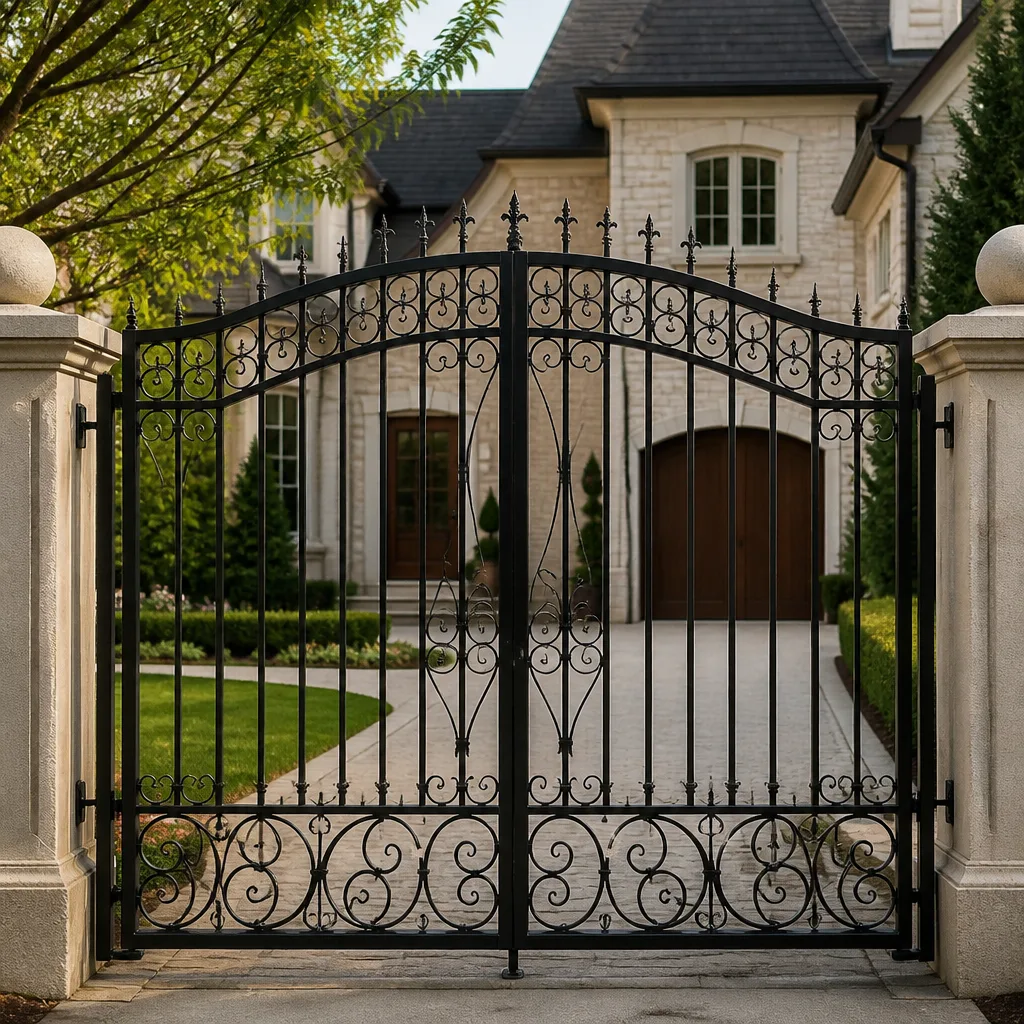 Wrought iron
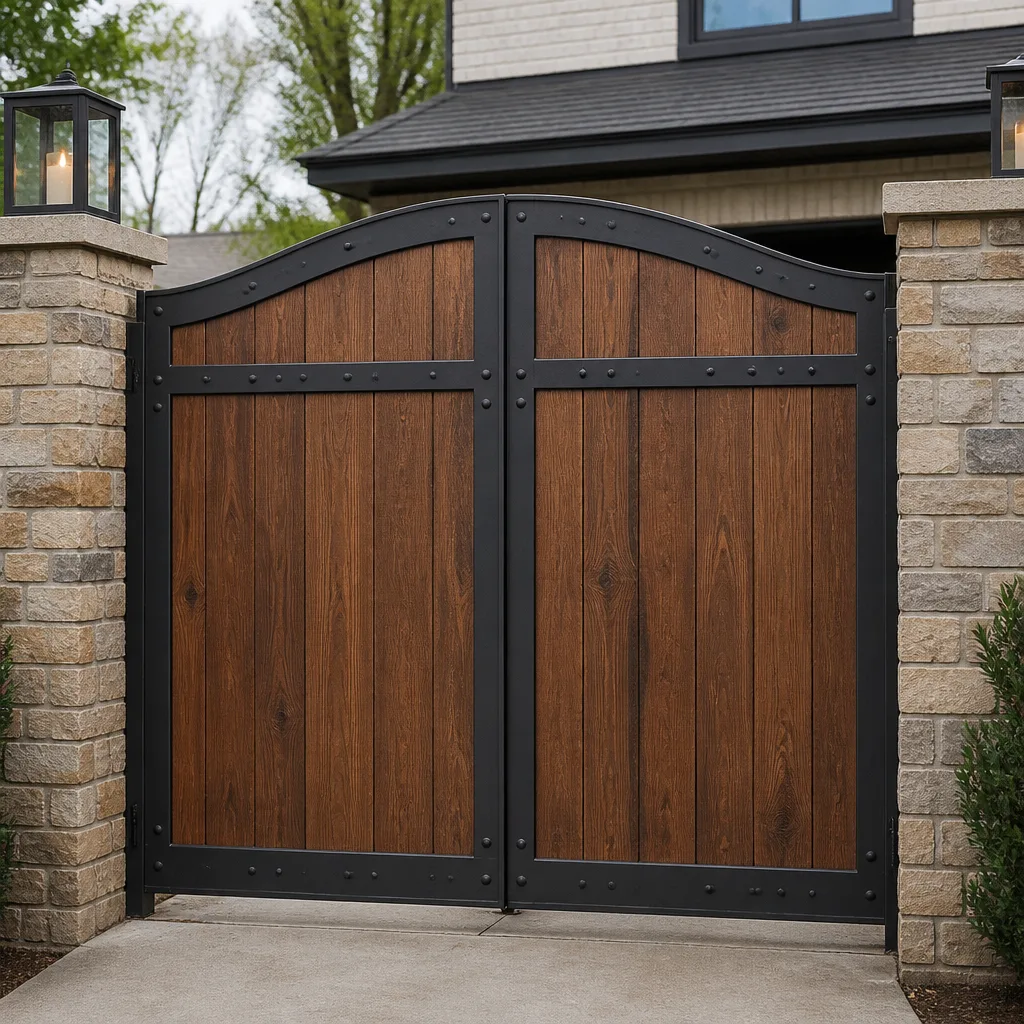 Wood & steel frame
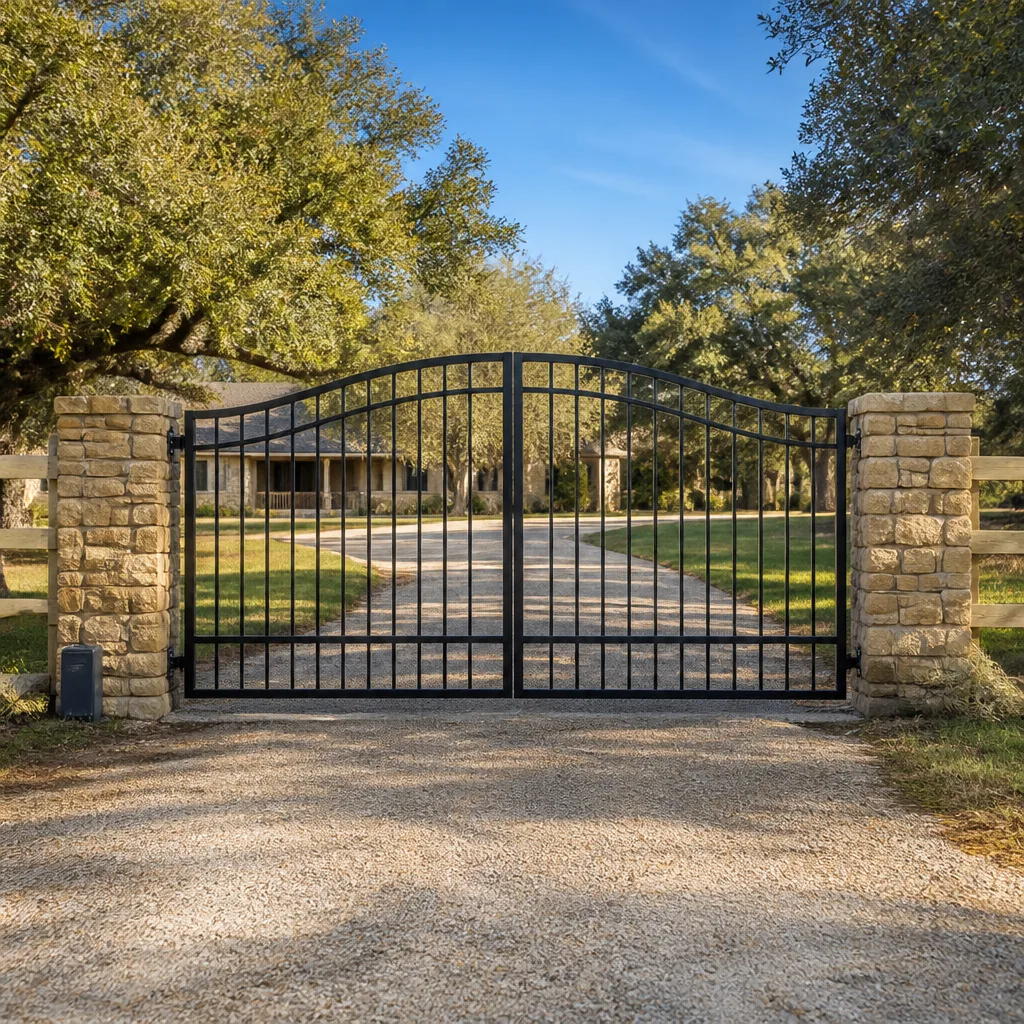 Farm & ranch
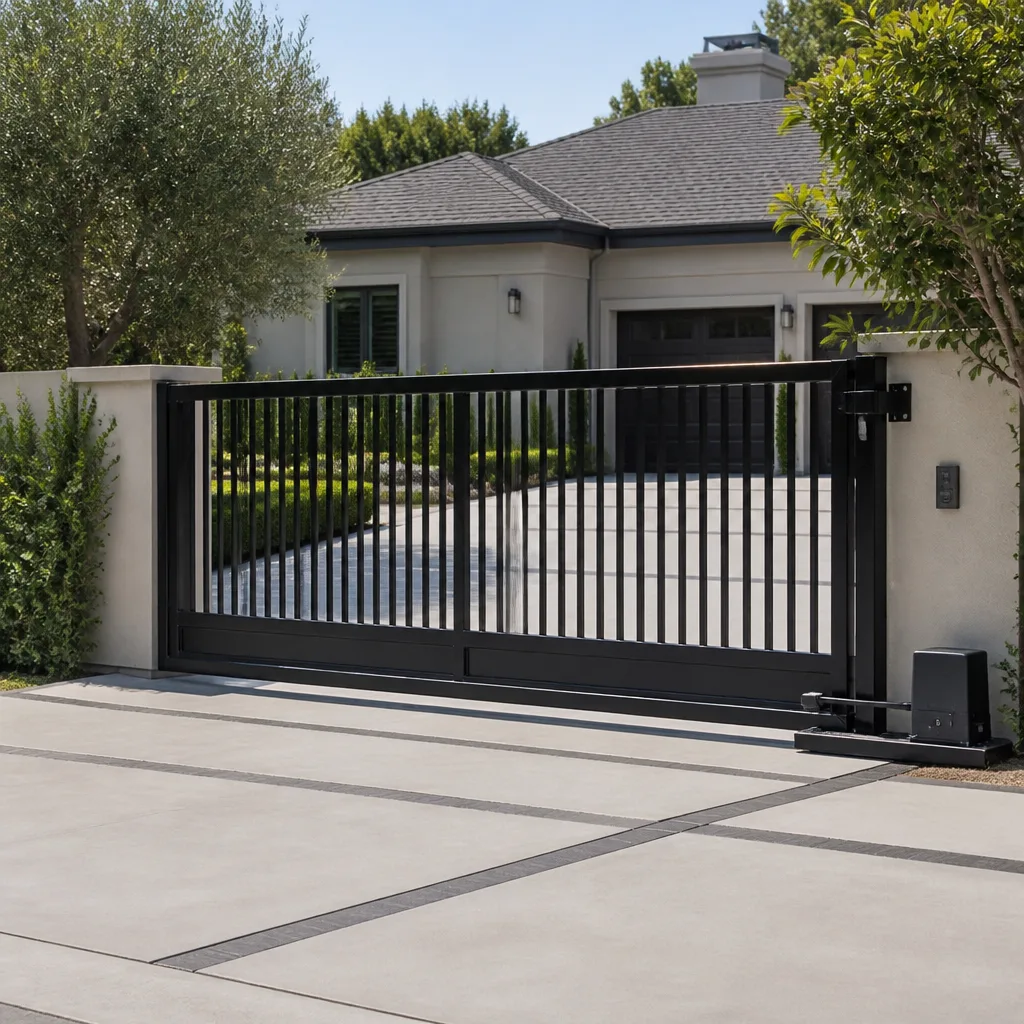 Sliding driveway gates
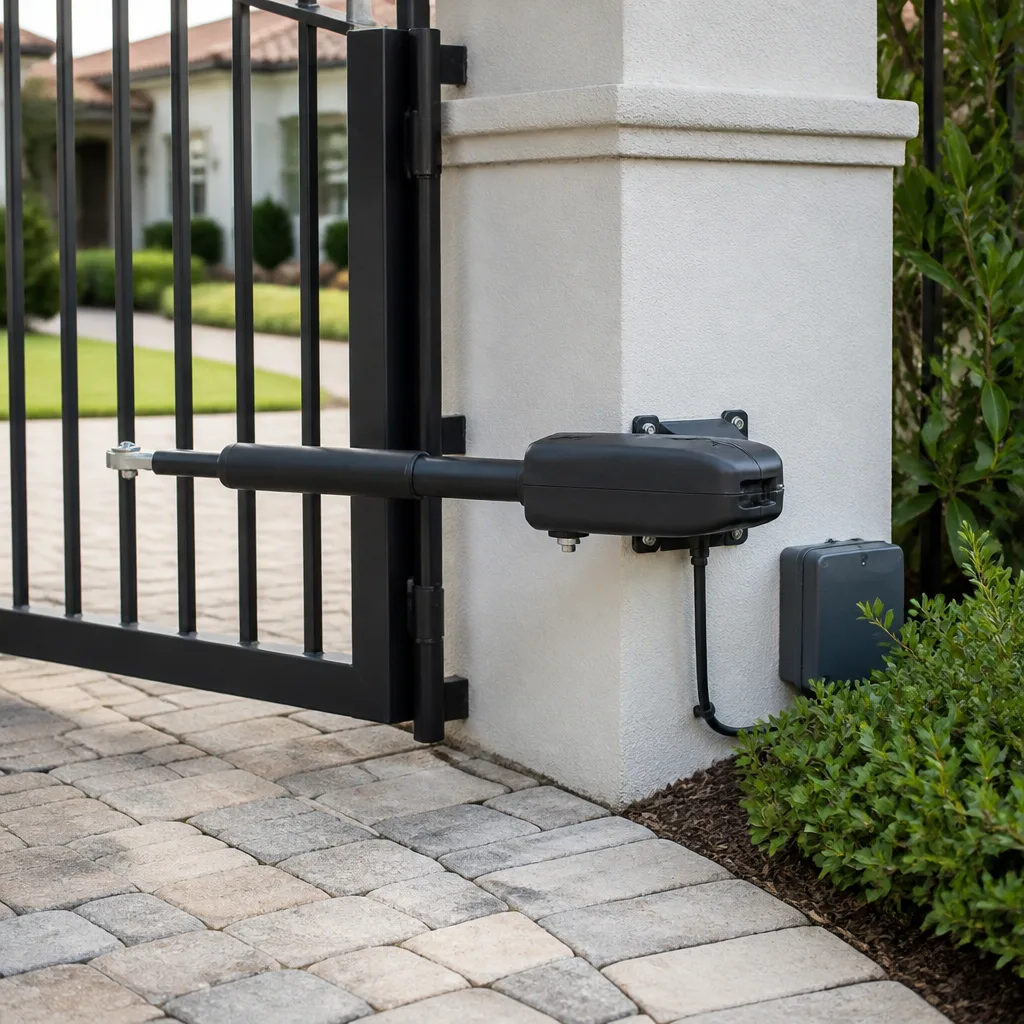 LiftMaster operators
Free on-site gate assessment - hinges, posts, and your LiftMaster or Nice gate operator checked before anything is quoted
The assessment is free and the quote is the invoice.
Get your free estimateGate Repair Warning Signs: A Fresno Homeowner’s Reference Guide
A gate that swings open on its own in a light breeze is not a latch problem. It’s almost always a post or hinge alignment problem that costs three to four times more to fix than a latch, and replacing the latch first means you’ll replace it again in less than a year. Most Fresno homeowners call us for Gate Repair services after the gate has already failed, which means they pay for damage that could have been prevented. This guide ranks gate warning signs by actual repair cost and safety risk so you can prioritize without anxiety. You’ll learn what to monitor, what to schedule, what to call about this week, and which five warning signs are unique to Fresno’s soil, sun, and irrigation habits.
Styles & brands we work with
Quick Answer
The warning signs that matter most on a Fresno gate are a tilting post, a gate that scrapes the ground, and rust bleeding from welded joints. These three indicate structural or safety problems that get more expensive by the month. Squeaking hinges and a sluggish latch are lower urgency but should be addressed within 30 days. A gate that won’t stay closed is a latch or alignment issue, not a latch-only fix. For gate repair in Fresno, call Latch and Post Gate Repair Fresno at (559) 785-2501 for a free estimate.
Table of Contents
- The Three Urgency Tiers: Monitor, Schedule, Call This Week
- Five Warning Signs Unique to Fresno Conditions
- Structural Warning Signs: Posts, Footers, and Hinges
- Mechanical Warning Signs: Latches, Closers, and Rails
- Electric Gate Warning Signs: Safety-Critical vs. Nuisance
- Pet and Child Safety: The 4-Inch Gap Standard
- What Each Ignored Sign Actually Costs in Fresno
- Common Mistakes to Avoid
- When to Call a Professional
- Frequently Asked Questions
- The Bottom Line
The Three Urgency Tiers: Monitor, Schedule, Call This Week
Not every gate symptom deserves the same reaction. A hinge that squeaks in August is annoying. A post that has tilted two inches is a structural failure waiting to happen. Treating every symptom as equal leads homeowners to either panic too early or ignore something genuinely serious. Here’s how we rank gate warning signs in Fresno.
Tier 1: Call This Week
These signs indicate active structural movement, safety risk, or damage that compounds quickly. Call for an estimate within seven days.
- Visible post tilt: If the post leans more than 1 inch out of plumb when you sight down the gate line, the footer is failing or the post base is rotting. This will not correct itself.
- Gate scrapes the ground: The gate edge drags or gouges the concrete or dirt. This adds $200 – $400 to the eventual repair because the bottom rail and sometimes the post base are both damaged by the time a homeowner calls.
- Rust bleeding from welds: Orange-brown streaks at welded joints mean water has entered the joint. Fresno’s tule fog season accelerates this. The joint is weakening.
- Electric gate reverses for no reason: If an automated gate starts closing and then reverses without any visible obstruction, the safety edge or photo eye may be failing. This is an entrapment risk and needs immediate attention.
- Gate slams shut: A closer that no longer controls the swing means someone’s fingers or a pet’s paw are at risk every time the gate moves.
Tier 2: Schedule Within 30 Days
These signs are not emergencies but will get worse. Scheduling within a month prevents them from becoming Tier 1 problems.
- Latch sticks or requires force: Mineral-laden irrigation water in Fresno can freeze a latch’s internal mechanism. Forcing it damages the strike plate and the latch body.
- Gate drifts open or closed on its own: In a light breeze, this usually means a hinge alignment issue, not a latch problem. Replacing the latch first means you’ll replace it again in less than a year.
- Squealing or grinding during operation: This is metal-on-metal wear. It’s cheap to fix now and expensive to fix after the hinge pin has ovaled the barrel.
- Wood crumbling at screw holes: UV-bleached wood in Fresno loses its ability to hold screws. When you see sawdust or crumbling around a hinge screw, the wood needs repair before the screw pulls out entirely.
- Gate operator moves slowly: A sluggish motor may be low voltage, a failing capacitor, or a worn gear. It’s a nuisance today and a burned-out motor later.
Tier 3: Monitor
These signs are worth noting but don’t require action yet. Check them monthly.
- Light surface rust on non-welded metal: A little rust on a flat steel surface is cosmetic. Watch for rust bleeding from joints, which is structural.
- Fading paint or stain: Cosmetic. Fresno’s UV exposure fades everything. The structural concern is only when wood begins to crack or crumble.
- Minor squeak in cold weather: Temperature shifts can cause temporary noise. If it disappears in warm weather, it’s metal expansion, not wear.
- Slight gate sag of less than half an inch: Check monthly. If it increases, move to Tier 2.
Five Warning Signs Unique to Fresno Conditions
Fresno’s climate and soil create gate problems you won’t see in coastal California or the Pacific Northwest. Here are the five we see most often, and what they look like.
1. Alkali Soil Efflorescence on Concrete Footers
Fresno’s soil is naturally alkaline and high in soluble salts. When irrigation water soaks the soil around a gate post footer, the water carries those salts up through the concrete. The salts crystallize on the surface as a white, chalky powder called efflorescence. Efflorescence itself is cosmetic. But its presence means water is moving through the footer, which means the concrete is absorbing and releasing moisture repeatedly. Over time, this cycle can degrade the footer’s bond to the post and cause the post to shift. If you see white powder at the base of your gate post, check the post for tilt and watch for new cracks in the concrete.
2. UV-Bleached Wood That Crumbles at Screw Holes
Fresno gets more than 270 sunny days per year, and summer UV radiation is intense. Wooden gates, especially those without recent sealing, lose their surface integrity. The first place this shows up is at screw holes. The wood around a hinge screw or latch screw turns pale, then soft, then crumbly. The screw loses purchase and the hardware loosens. We’ve seen gates where every screw on the latch side is finger-loose because the wood simply can’t hold them anymore. The repair is not just replacing screws. It’s filling and reinforcing the wood or replacing the affected board. Sealing your wood gate every two to three years slows this damage.
3. Rust Bleed at Welded Joints from Tule Fog
Fresno’s winter tule fog is dense, low-lying, and persistent. It can sit on a gate for days at a time. Steel gates with welded joints are most vulnerable at the welds, because welding changes the metal’s surface chemistry and makes it more prone to corrosion. Rust bleed, the orange-brown streaks running down from a weld, means the joint is actively corroding. Surface rust can be cleaned and painted. Rust bleed at a weld means the structural connection is degrading. This is a Tier 1 sign on any gate that holds weight or bears a load.
4. Latch Freeze from Mineral-Laden Irrigation Water
Most Fresno irrigation water comes from surface sources and groundwater with high mineral content, particularly calcium and magnesium. When sprinkler overspray hits a gate latch repeatedly, the water evaporates and leaves mineral deposits inside the latch mechanism. Over months, these deposits pack the latch’s springs and tumblers. The latch becomes stiff, then frozen. You’ll notice you have to turn the key harder or pull the handle with more force. Forcing the latch damages the strike plate. The fix is cleaning the internal mechanism or replacing the latch, not lubricating the outside, which does nothing to remove mineral buildup inside.
5. Ground Heave Cracks Along the Footer Line
Fresno sits on expansive clay soil in many neighborhoods. This soil swells when wet and shrinks when dry. A gate post footer is a rigid concrete block embedded in soil that moves. When the soil swells after winter rain or heavy irrigation, it presses upward on the footer. When it shrinks in summer, the footer settles back down. This cycle creates a visible crack line where the footer meets the surrounding soil. It can also create hairline cracks in the footer itself. A single hairline crack is usually fine. A widening crack, or a post that has shifted, means the heave cycle is winning. If you see a gap opening between the soil and the footer edge, monitor it monthly.
Structural Warning Signs: Posts, Footers, and Hinges
Every gate comes down to two parts: the latch that holds it and the post that carries it. The post takes all the load, all the swing force, and all the weather. When a post fails, the entire gate fails. Here’s how to check yours.
How to Test for Post Tilt
- Stand at the hinge side of the gate and sight down the post from its base to its top.
- Compare the post’s line to the gate line and to any adjacent fence line.
- Place a level against the post face. A post more than 1 inch out of plumb over a 6-foot height is actively shifting.
- Look for a gap between the post and the fence rail. If the gate post has pulled away from the fence, the footer is rocking.
- Check the soil around the footer. A visible gap between soil and concrete means the footer is moving with the heave cycle.
If the post has shifted less than half an inch and is stable, it can often be re-shimmed or re-set. If it has moved an inch or more, the footer usually needs to be re-poured. That’s a bigger job, which is why catching tilt early matters. In our experience, a post that has shifted 2 inches has been moving for at least six months. The homeowner just didn’t notice.
Hinge Wear and Sag
A gate that sags means the hinge system is no longer holding the gate level. On a wooden gate, this often shows up as a diagonal crack running from the top hinge corner toward the bottom latch corner. On a metal gate, sag shows up as a gate that catches on the latch side or scrapes the ground at the far end. Hinge wear happens gradually. The hinge pins oval out the barrels, and the gate drops. Ignoring sag until the gate won’t latch means the hinge hardware, and sometimes the hinge-side post, have to be replaced. Catching it while the gate is still half an inch high means you might only need new hinges or a tension adjustment.
Mechanical Warning Signs: Latches, Closers, and Rails
Most mechanical gate failures in Fresno fall into three categories: latches, closers, and bottom rails. Each has its own warning signs and each has a different cost profile.
Latch Problems
A latch that sticks, won’t catch, or requires force is telling you something specific. In Fresno, the most common cause is mineral buildup from irrigation overspray, as described above. But there are other causes. Strike plate misalignment happens when the gate sags or the post shifts. The latch tongue no longer lines up with the strike plate hole. This is not a latch problem. It’s an alignment problem, and replacing the latch won’t fix it. If your latch works smoothly when the gate is lifted by half an inch, the problem is sag, not the latch. Call a professional to correct the sag first, then assess the latch. Most standard gate-latch replacements in Fresno run between $145 and $275, and you’ll see the exact number in writing before we touch anything.
Closer and Spring Problems
A gate closer, whether it’s a hydraulic arm or a tension spring, controls how the gate swings and holds it in place. A closer that slams the gate is a safety hazard. A closer that lets the gate drift is a security issue. A closer that resists opening means the internal seal or spring is worn. Each of these has a fix, and most closers are replaceable without replacing the gate. The danger sign to watch for is a gate that accelerates as it closes. That means the closer’s damping function has failed, and the gate is free-swinging with all its weight behind it. A 150-pound gate closing at speed will break fingers and injure pets. Call this week if you see it.
Bottom Rail Damage
The bottom rail is the horizontal member at the lowest edge of the gate. On a metal gate, this rail is often the first to rust. On a wooden gate, it’s the first to rot. Fresno’s winter fog and irrigation overspray keep the bottom rail damp in cycles. If your gate scrapes the ground, the bottom rail is grinding against concrete or soil every time the gate moves. That grinding removes material from the rail and sends shock force into the post base. The repair often includes replacing the bottom rail, re-setting the hinge post, and sometimes replacing the entire gate frame. A gate that scrapes now costs more than a gate that is caught before it scrapes, because the damage compounds. The dollar consequence of ignoring a scraping gate is an additional $200 to $400 on the eventual repair bill.
Electric Gate Warning Signs: Safety-Critical vs. Nuisance
Electric gate operators add a motor, control board, safety sensors, and sometimes a keypad or intercom. When these systems show warning signs, the first question is always: is this a safety-critical failure or a nuisance failure?
Safety-Critical Failures
These are failures that can hurt someone. They need immediate attention.
- Gate reverses without obstruction: If the gate starts to close and then reverses without anything in its path, the safety edge sensor or photo eye is triggering falsely, or not triggering when it should. A misaligned photo eye may fail to detect a child in the gate path. This is the single most important electric gate warning sign to act on.
- Gate does not stop when resistance is applied: Modern operators are required to have an entrapment protection system. If the gate keeps pushing against resistance, the protection system has failed. This is a compliance failure and a serious injury risk.
- Gate closes at full speed: A properly functioning operator should slow before reaching the closed position. If it slams closed at speed, the limit switches or soft-close function have failed.
Nuisance Failures
These are annoying but not dangerous. They should be fixed, but they don’t require an emergency call.
- Slow open or close speed: This usually indicates a failing capacitor, a voltage drop, or a worn gear. It’s an inconvenience today and a dead motor later.
- Intermittent operation: The gate works sometimes and doesn’t work other times. This is often a control board issue, a loose connection, or a receiver problem.
- Remote range decreased: If your remote only works from 20 feet instead of 50, the receiver antenna may be degraded or there may be new interference.
We service electric gate operators from FAAC, BFT, Linear, and Viking, among others. Each brand has its own failure patterns, and factory training means we recognize them on the first visit. For electric gate repair in Fresno, call (559) 785-2501 and describe what the gate is doing. We’ll tell you over the phone whether it sounds safety-critical or nuisance-level, and schedule accordingly.
Pet and Child Safety: The 4-Inch Gap Standard
If you have small children or small-breed dogs, the gap between your gate and the fence post, or between the gate pickets, matters. A gap of 4 inches or less is the standard that prevents a small child’s head or torso from passing through, and prevents a small dog from squeezing through or getting stuck. Many older Fresno gates were built with wider spacing, and wood shrinkage or gate sag can widen gaps over time.
How to Check Your Gate Gaps
- Measure the gap between the gate edge and the post on the latch side with the gate closed.
- Measure the gap between the gate edge and the post on the hinge side.
- Check the spacing between pickets on wooden gates. If any gap exceeds 4 inches, a child or small dog can pass through.
- Check the gap under the gate. A small dog can dig or squeeze under a gate with more than 3 inches of ground clearance.
- If the gate has bent pickets or a bottom rail that has rusted away, those gaps count too.
Repair types that restore the 4-inch spec include adding a picket gap filler, replacing a warped picket, re-hanging the gate to close the latch-side gap, and replacing a corroded bottom rail. If you have a gate with a gap larger than 4 inches and small children or pets at home, this should move to Tier 1. The cost to close a gap is far less than the cost of a lost dog or an injured child.
What Each Ignored Sign Actually Costs in Fresno
Warning signs are useful because they carry dollar consequences. For more guides & resources, explore our blog. Here’s what we tell homeowners in Fresno about the cost of waiting.
Tier 1 Signs: The Cost of Ignoring
| Warning Sign | Ignored Cost Range | Early Repair Cost Range | Difference |
|---|---|---|---|
| Gate scrapes the ground | $550 – $900 (bottom rail, post base, hinge reset) | $180 – $350 (hinge adjustment, minor rail repair) | $200 – $400 additional |
| Visible post tilt | $700 – $1,200 (footer re-pour, post replacement) | $250 – $500 (re-shim, re-set post) | $400 – $700 additional |
| Rust bleed at welds | $400 – $800 (weld repair, section replacement, repaint) | $150 – $300 (rust treatment, touch-up, sealing) | $200 – $500 additional |
| Electric gate reverses falsely | $300 – $600 (sensor replacement, board troubleshooting) | $125 – $250 (sensor alignment, cleaning) | $150 – $350 additional |
These are Fresno market ranges from our years of local service. Every quote we provide is written before any work starts, so you’ll know the exact number before a technician begins. No surprises, no upsells, no pressure.
Common Mistakes to Avoid
- Replacing the latch when the gate is misaligned. A gate that swings open on its own in a light breeze is not a latch problem. It’s usually a post or hinge alignment problem. Replacing the latch first means you’ll replace it again within a year.
- Lubricating a latch that’s frozen from mineral buildup. Spray lubricant on the outside of a latch does not remove calcium and magnesium deposits inside the mechanism. The latch needs to be opened and cleaned or replaced.
- Ignoring a squeaking hinge because it’s “just noise.” Squeaking means metal-on-metal friction. The hinge pin is wearing the barrel. The longer it squeaks, the more the hardware wears, and the more likely the gate develops a sag.
- Painting over rust bleed. Paint covers the cosmetic issue but not the corrosion inside the weld. The joint keeps rusting under the paint and fails later, often more expensively.
- Using a standard padlock on a gate that needs a latch repair. A padlock does not align the gate or restore the closer. It gives a false sense of security while the underlying problem worsens.
- Waiting until the gate won’t open at all. A gate that’s hard to open is giving you weeks or months of warning. Calling when it’s under active strain is cheaper than calling when it has fully failed.
- Assuming all electric gate problems need a new motor. Many operator failures are sensor issues, capacitor problems, or control board glitches. A brand-approved diagnosis from a trained technician can save you the cost of a full motor replacement.
When to Call a Professional
Call a gate professional when you see a post tilt of more than 1 inch, when the gate scrapes the ground, when rust bleeds from welds, when an electric gate reverses without obstruction, or when the gate slams shut. These are structural or safety problems that don’t get better with time. Also call when you’re not sure which tier a warning sign falls into. A 10-minute phone conversation can save you hundreds of dollars in compounding damage. Latch and Post Gate Repair Fresno offers free estimates in Fresno and the surrounding area. Call (559) 785-2501 and a live person answers, day or night.
If you’re considering a new gate instead of another repair, see our gate installation guide for Fresno homeowners.
Frequently Asked Questions
Gate repair in Fresno typically runs between $145 for a basic latch replacement and $1,200 for a full post re-set with a new footer. Most repairs fall between $250 and $600. You’ll get a written price before any work starts, every time. Call (559) 785-2501 for an exact quote, estimates are free.
Yes. Many latch, hinge, and closer repairs in Fresno can be completed the same day we diagnose them. Structural work, like a footer re-pour, requires scheduling. Call (559) 785-2501 and describe what the gate is doing, and we’ll tell you what’s realistic.
A gate that swings open on its own is almost always misaligned at the hinge post or the hinges have worn unevenly. The gate’s weight is no longer balanced, so gravity and wind move it. This is not a latch problem, and replacing the latch will not fix it. Call (559) 785-2501 to schedule an alignment check.
A full gate installation includes the gate itself, posts, footers, hinges, latch, and any closer or operator specified. We provide a written price before any work begins, including materials, labor, and cleanup. For details, see our gate installation in Fresno page. Call (559) 785-2501 to schedule a free measure and quote.
Yes. We handle low-voltage power runs, photo eyes, safety edges, control boards, and operator installation for FAAC, BFT, Linear, and Viking systems, among others. Every electric gate install includes entrapment protection. Call (559) 785-2501 to talk through what your gate needs.
Test the gate’s entrapment protection. Close the gate and apply resistance with your hand. The gate should stop or reverse immediately. If it pushes through resistance, the safety system has failed and you should treat the gate as unsafe. Call (559) 785-2501 and a live person will talk you through what to do next.
The Bottom Line
Fresno gates fail in predictable ways, and the warning signs are legible if you know what to look for. A tilting post, a scraping gate, and rust bleeding from welds are the three signs that cost the most when ignored. Mineral-laden irrigation water, tule fog, alkali soil, and UV exposure create a unique failure profile in Fresno that you won’t see in other California markets. See our Seasonal Gate Repair Care for Fresno: Year-Round Homeowner’s Guide for maintenance tips tailored to these conditions. Rank the signs by tier, act on Tier 1 within the week, and schedule Tier 2 within 30 days. Every gate comes down to two parts: the latch that holds it and the post that carries it. If either one is compromised, the gate will fail. The cheapest repair is the one you catch before it becomes a replacement.
Written by Cody Beckman, Owner at Latch and Post Gate Repair Fresno, serving Fresno since 2009.
See the difference
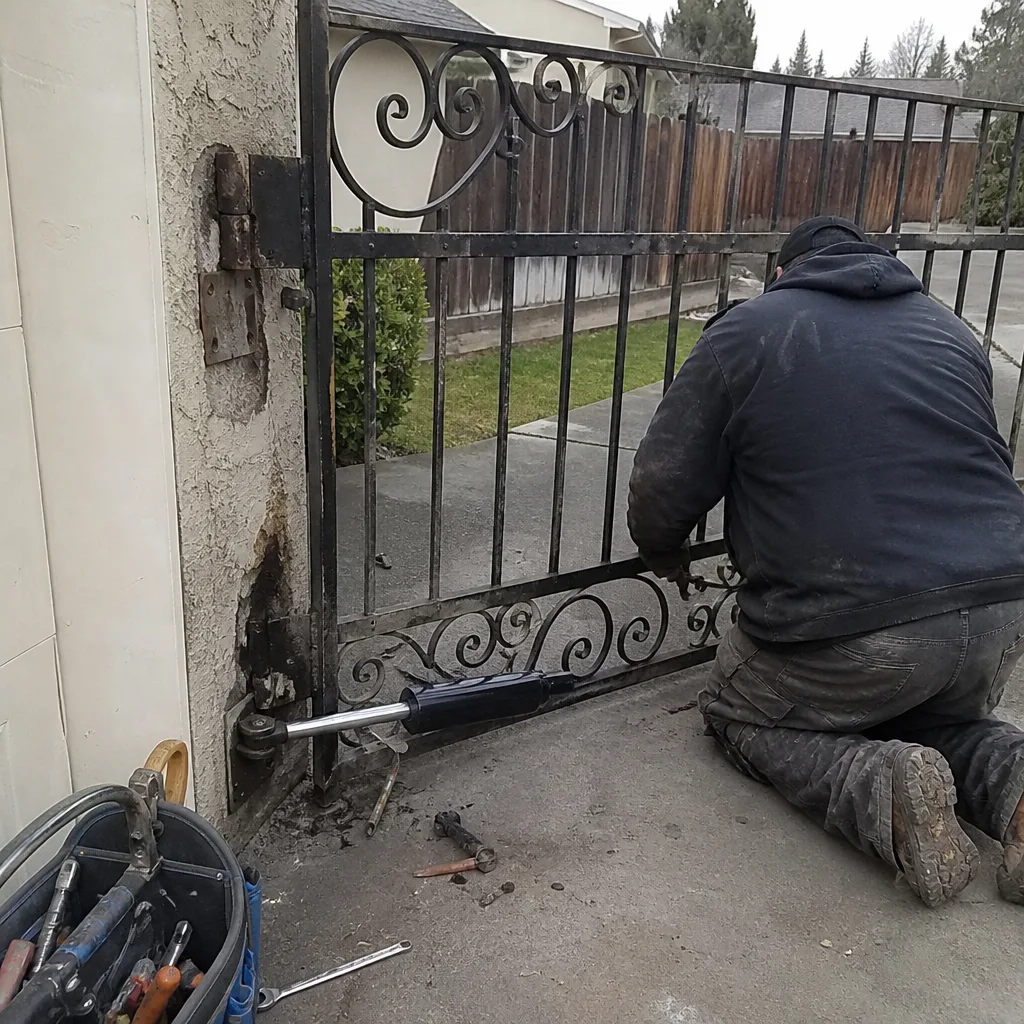 Before
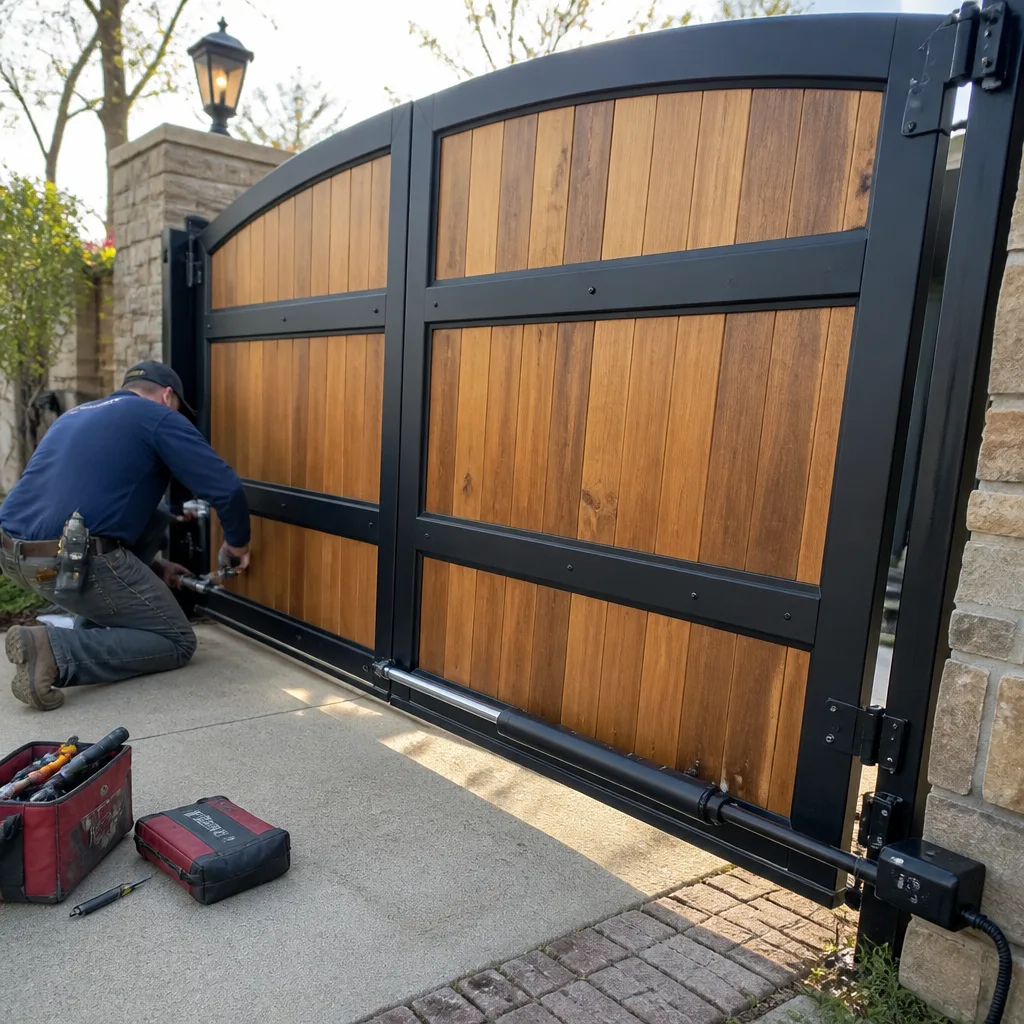 After
After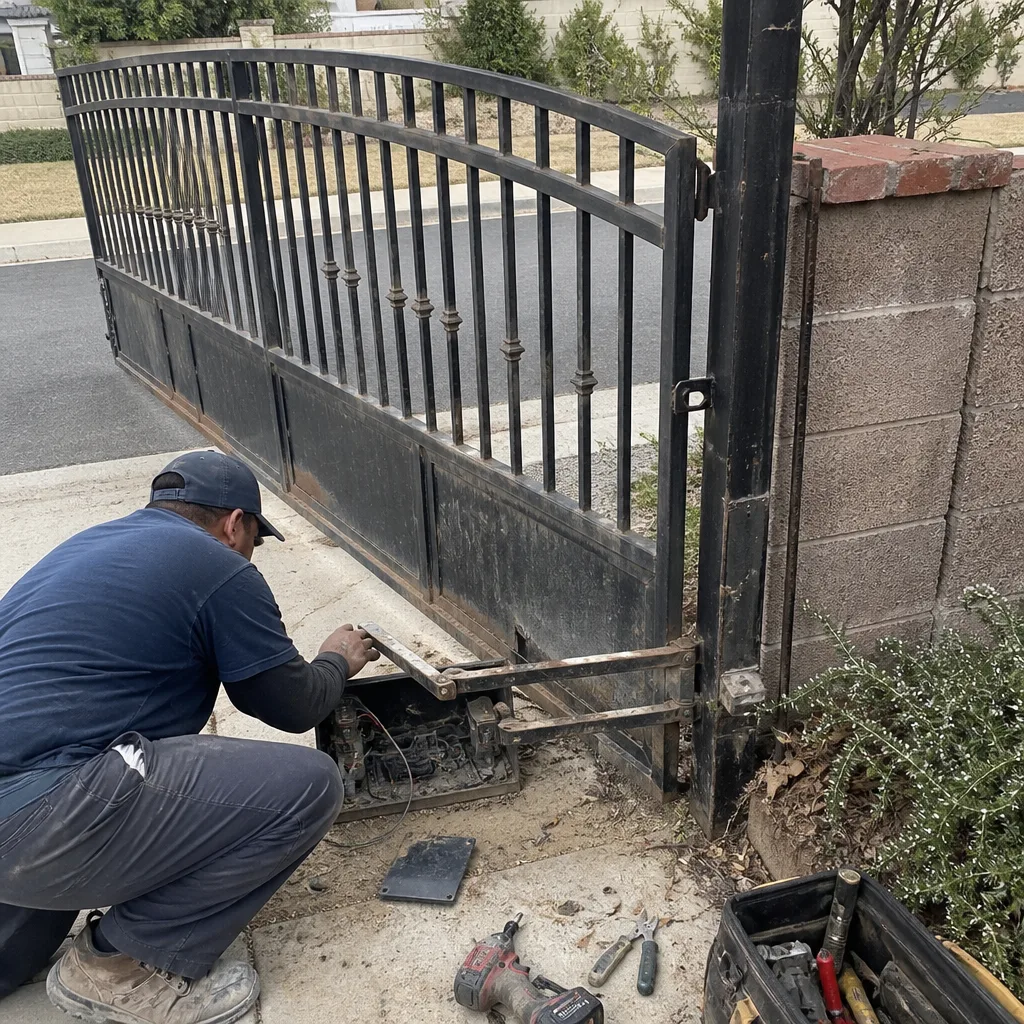 Before
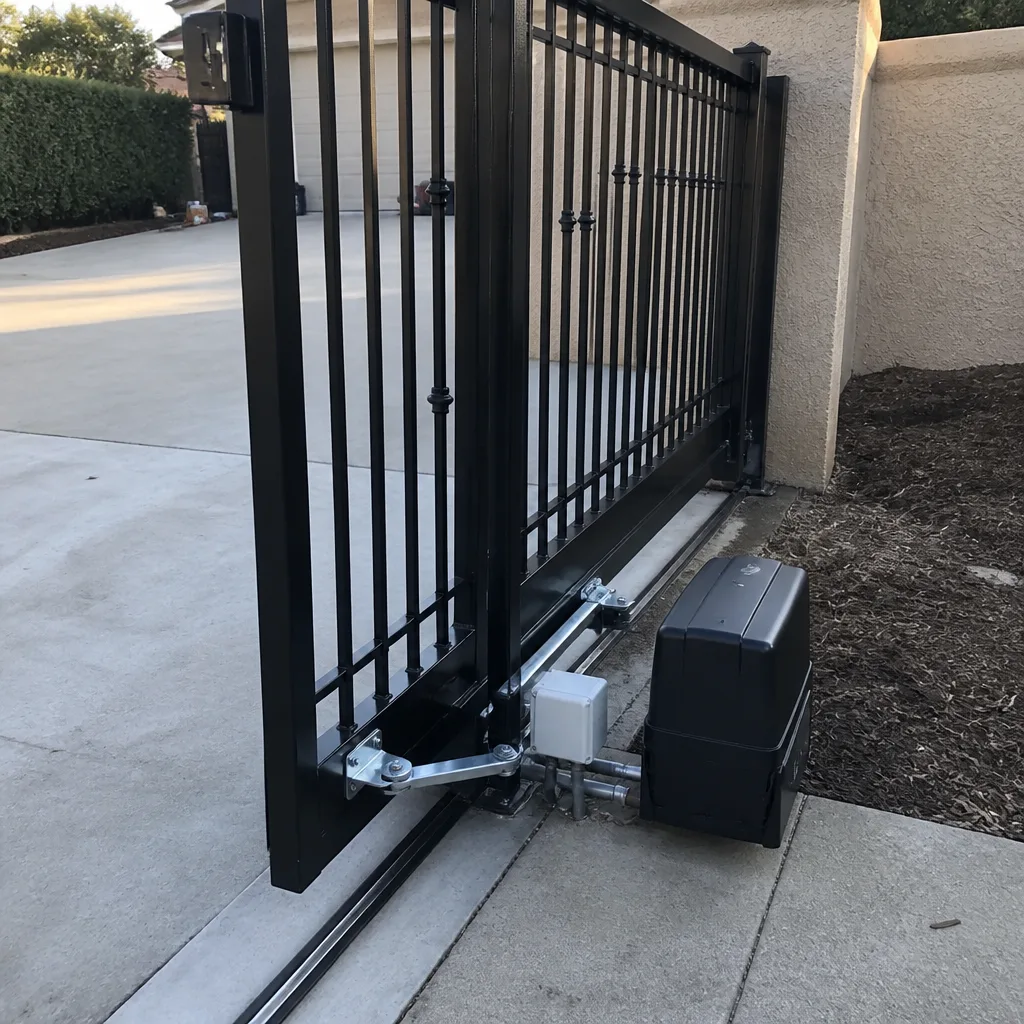 After
After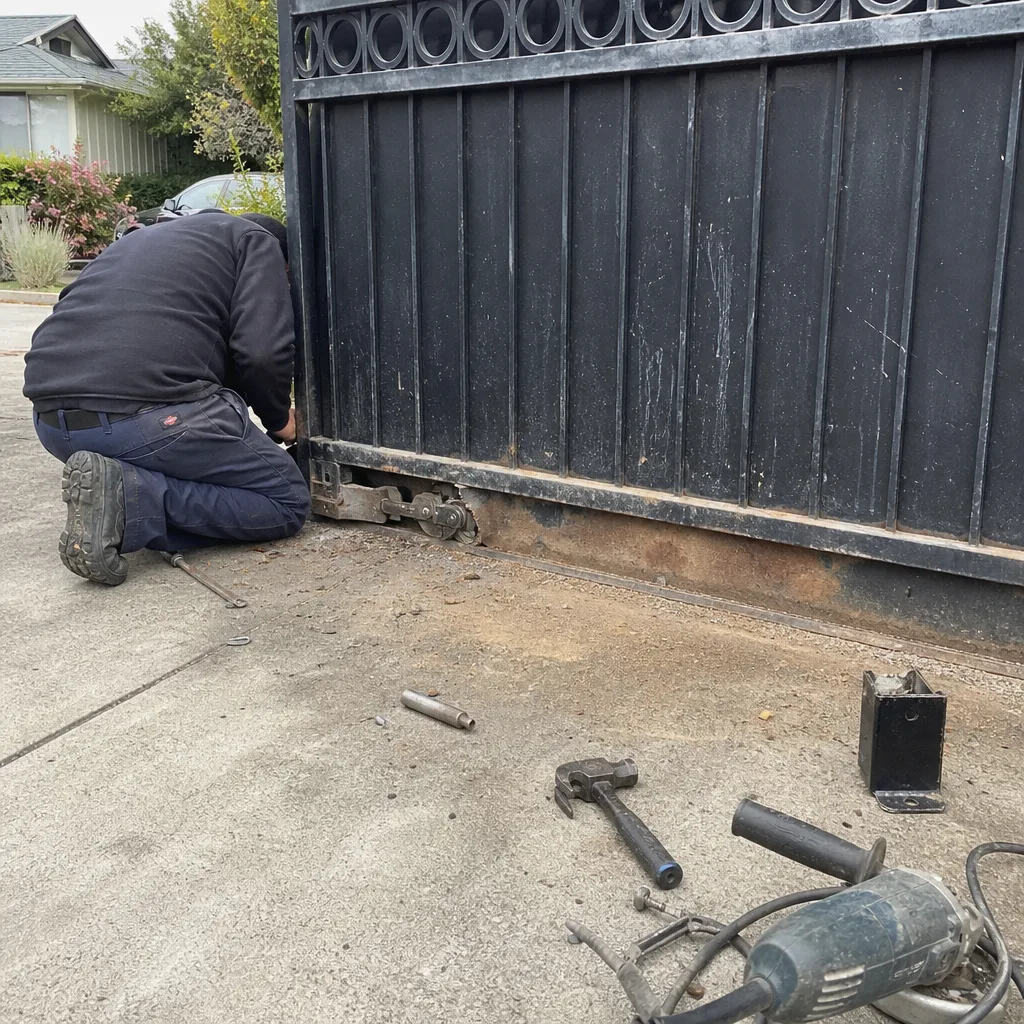 Before
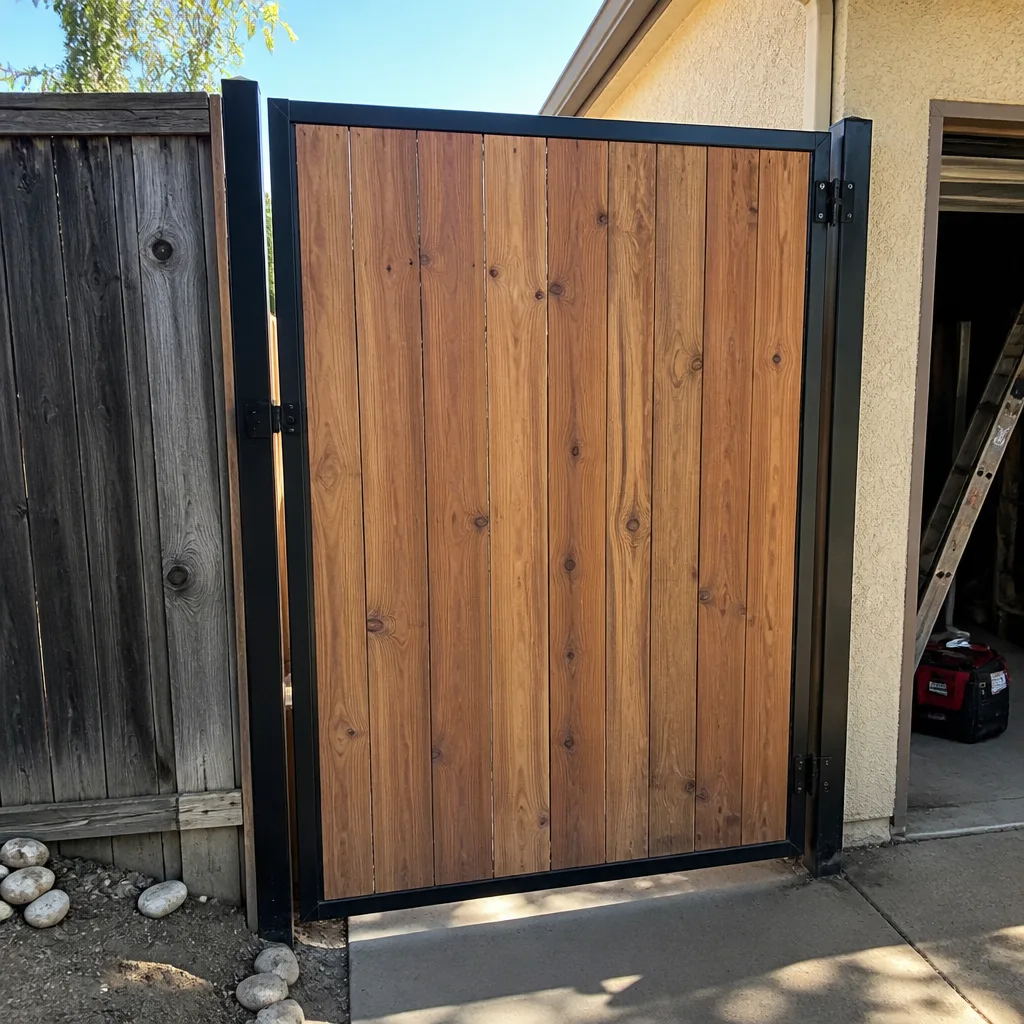 After
After