
Last updated October 17, 2026
 Wrought iron
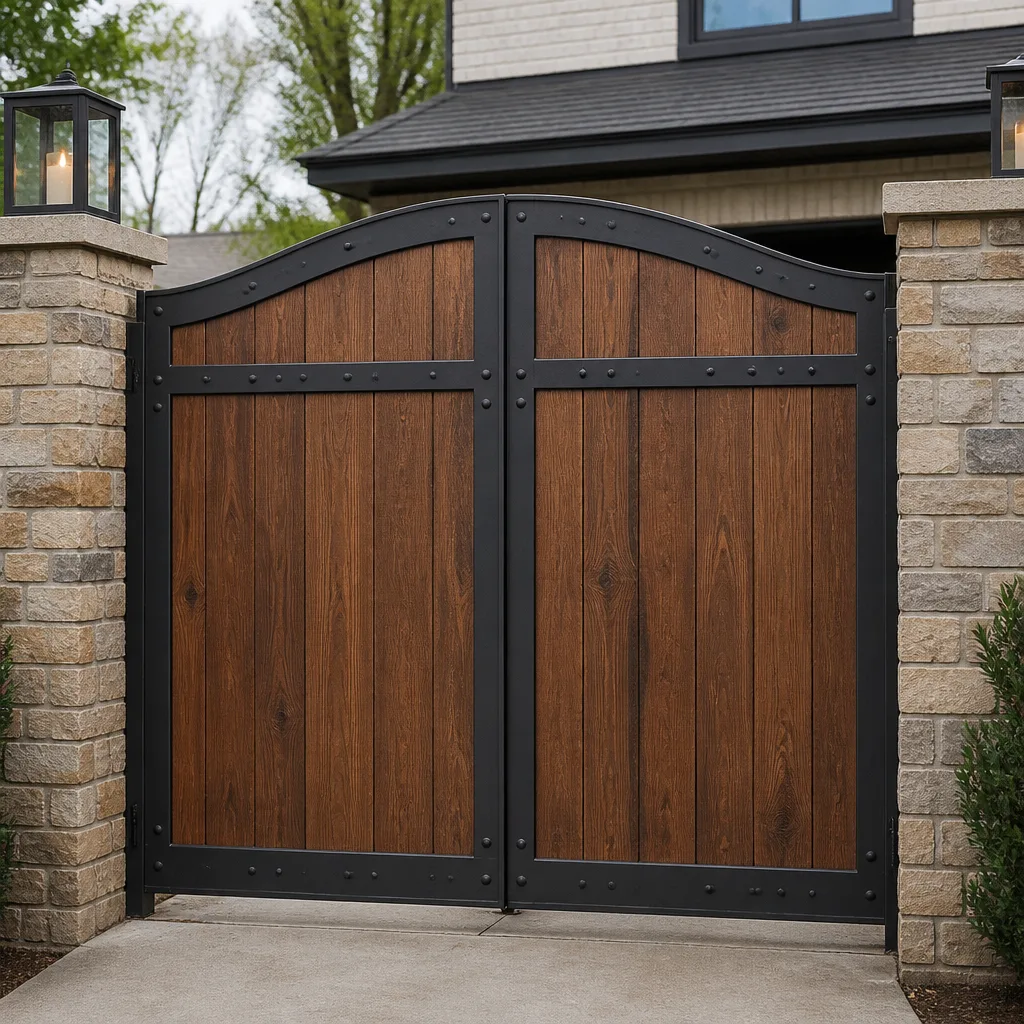 Wood & steel frame
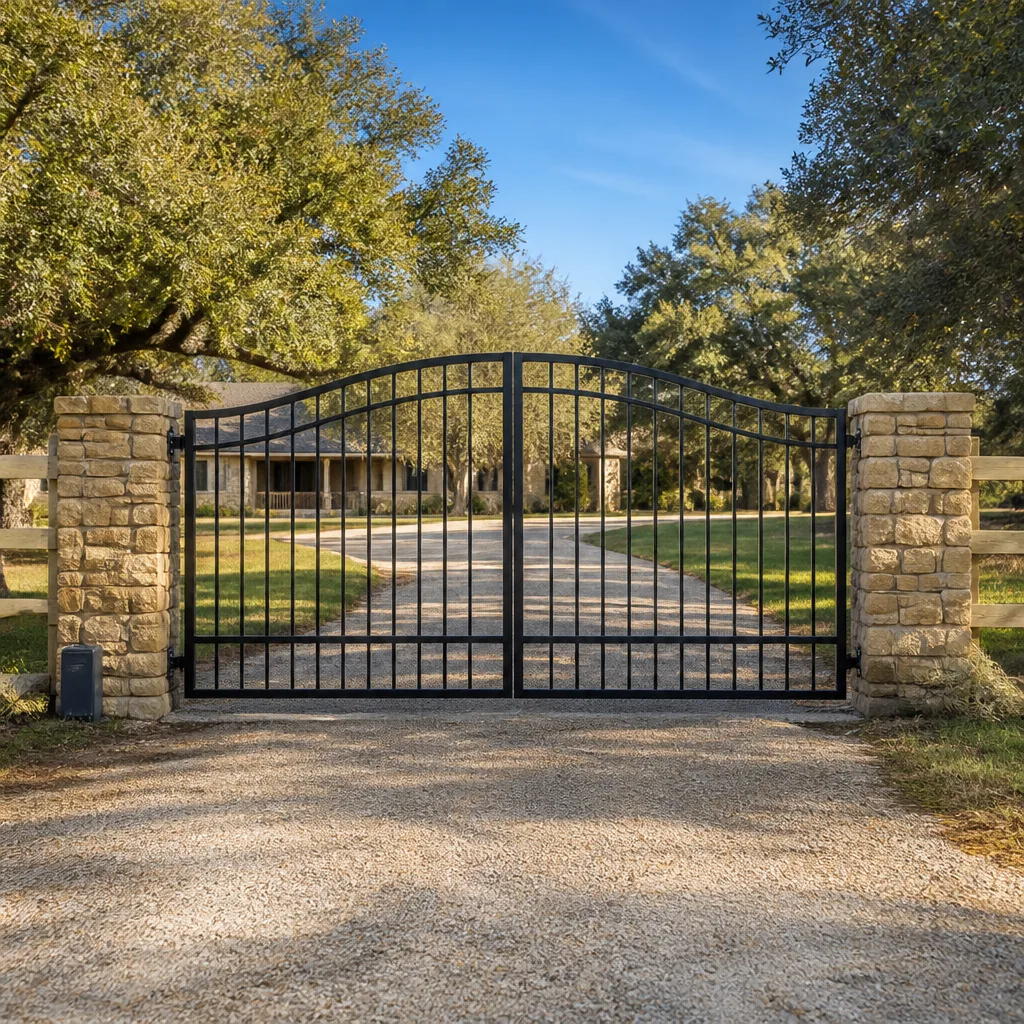 Farm & ranch
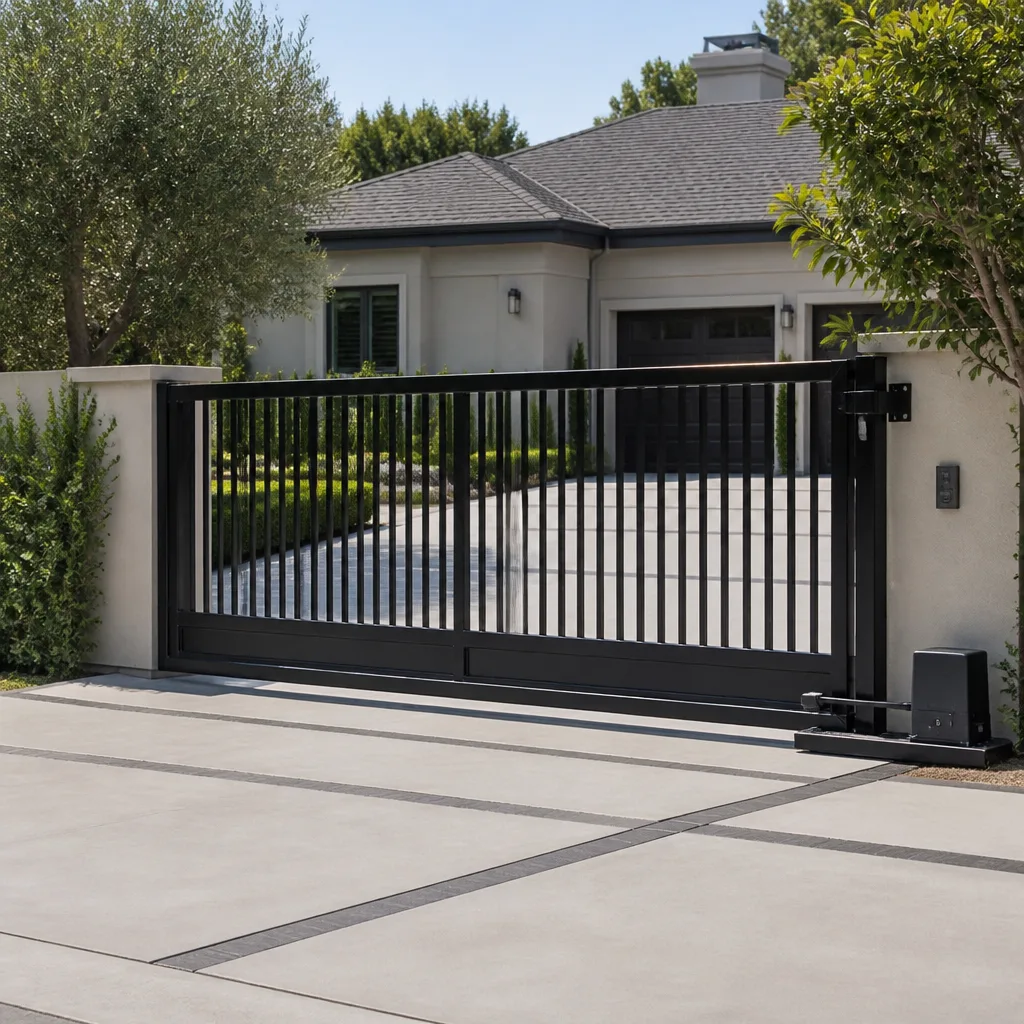 Sliding driveway gates
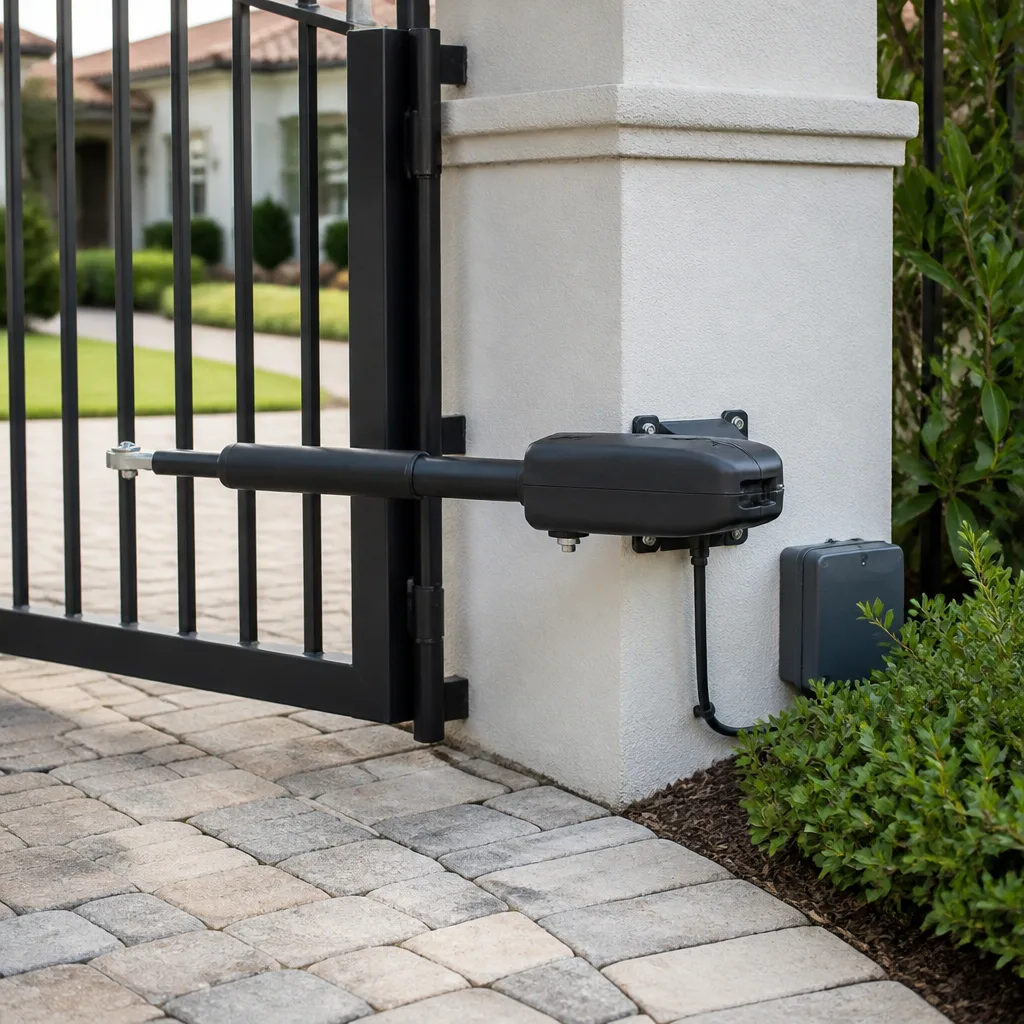 LiftMaster operators
Free on-site gate assessment - hinges, posts, and your LiftMaster or Nice gate operator checked before anything is quoted
The assessment is free and the quote is the invoice.
Get your free estimateSeasonal Gate Repair Care for Fresno: Year-Round Homeowner’s Guide
The best time to lubricate a Fresno gate’s hinges and recheck post plumb is the last two weeks of September, after the heat stress has peaked and before the first storm saturates the soil, yet almost every generic maintenance guide says “do it in spring.” Those guides were written for places with four gentle seasons, not for a city where a cedar gate bakes at 105°F in July and then sits in corrosive tule fog for weeks in January. This guide maps Fresno’s real climate calendar onto the maintenance your gate actually needs. You’ll learn what breaks and why, which two windows of the year matter most for preventive work, and what you can safely handle yourself versus what deserves a call to a Latch and Post Gate Repair Fresno home specialist.
Quick Answer
Seasonal gate care in Fresno means working inside the city’s two usable maintenance windows: late March, when wet-season soil movement and corrosion have done their damage, and late September, after summer heat stress peaks but before the first storms saturate the soil again. The most cost-effective maintenance tasks are tightening strike-plate screws with epoxy filler in October, applying cold galvanizing compound to iron hardware before the fog season, and checking post plumb both in March and September, so small corrections happen before a leaning post becomes a re-set job.
Styles & brands we work with
Table of Contents
- Fresno’s Real Climate Calendar: Two Damaging Seasons, Two Repair Windows
- What the June-to-September Heat Does to Cedar and Redwood Gates
- Why Tule Fog Corrodes Hardware Faster Than Rain
- The October Gate Prep List: Getting Ready for Fresno’s Rainy Season
- Spring Recovery: What to Check After the Wet Season Ends
- Electric Gate Operators: Seasonal Care for Fresno’s Power and Heat Reality
- The 10-Minute Monthly Check That Catches Most Problems Early
Fresno’s Real Climate Calendar: Two Damaging Seasons, Two Repair Windows
Fresno doesn’t have four equal seasons. It has two damaging ones and two transition windows. The damaging seasons are the triple-digit summer that runs roughly June through September and the wet, fog-heavy winter that runs November through February. The transition windows, late March and late September, are the only two stretches of the year when the weather is mild enough for sealants to cure properly, soil conditions are stable enough to measure post plumb accurately, and a homeowner can work outside without the materials fighting back. That’s not a preference. That’s how the materials behave.
Here’s the seasonal stress map for a standard Fresno Gate Repair in Fresno job:
- June to September: UV exposure and thermal expansion. Wood loses moisture fast through the end grain, coatings break down, and metal components expand and contract daily. Screws lose their bite in dried-out wood.
- October: The single best month for preventive work. Soil is dry enough to evaluate post stability, but the first significant rain hasn’t arrived. Coatings cure well in mild fall temperatures.
- November to February: Tule fog, rain, and saturated soil. Hardware corrodes faster than during rain alone, clay-heavy Fresno soil heaves, and posts that were slightly off-plumb get pushed further out of alignment.
- March: The second best work window. The ground is still moist but no longer saturated, which makes it easier to see exactly which posts have moved and by how much.
In our experience, the homeowners who schedule around these two windows spend about a third less on gate repairs over a decade than homeowners who wait for a hinge to seize or a post to visibly lean. The work is the same. The timing is what makes it cheaper.
What the June-to-September Heat Does to Cedar and Redwood Gates
Fresno summers pull moisture out of wood faster than the wood can replace it. Cedar and redwood, the two species most common in Fresno gates, respond to that stress in three predictable and visible ways. The first is end-grain checking, those small splits that appear at the top and bottom of boards where the open grain loses moisture fastest. The second is paint film failure, where the coating cracks and peels in a pattern that follows the wood grain because the board shrank slightly under the film. The third, and the one that causes most gate failures, is screw pull-through: the wood around a hinge screw dries and compresses, the screw loses its grip, and the gate begins to sag.
There is one genuinely useful thing you can do in June to slow this. Water the gate. Not the lawn, not the flower bed next to the gate, the gate itself. A slow, deep soaking of the soil under the gate posts once every two weeks in summer keeps the wood’s moisture content from bottoming out. The goal isn’t to keep the wood wet. It’s to slow the moisture loss enough that the seasonal shrink-and-swell cycle stays small. A post that swings through a 2% moisture change over a summer is fine. A post that swings through an 8% change starts to crack and loosen screws.
If you catch checking early, a quality exterior wood sealer applied in late September, when temperatures are below 90°F so the sealer can penetrate before it flashes off, can stop the splits from deepening. Check the top edge of every picket and post cap. That’s where Fresno’s sun does the most concentrated damage, and where most coatings fail first.
Why Tule Fog Corrodes Hardware Faster Than Rain
Tule fog is worse for a Fresno gate’s metal components than the rain itself. Fog is liquid water held in microscopic droplets that hang in the air for days, and those droplets sit directly against metal surfaces without the washing effect that rain provides. Rain falls, runs off, and takes surface contaminants with it. Fog condenses, stays, and keeps the surface continuously damp. Meanwhile, the air in a tule fog event carries dissolved nitrates and sulfates from valley air, which makes the condensation more chemically aggressive than clean rainwater.
Every unpainted steel bracket, hinge, or weld on a Fresno gate is being slowly eaten during fog season, whether you can see it or not. The corrosion often starts inside the hinge barrel or at the welded joint, where the metal is slightly porous and moisture can sit undisturbed.
There is a simple, inexpensive countermeasure that most homeowners in Fresno never hear about. A 12-ounce can of cold galvanizing compound, usually $12 to $18 at any Valley hardware or farm supply store, applied with a brush to any exposed iron or steel hardware in October extends the life of that hardware by two to three seasons. Cold galvanizing is a zinc-rich coating. The zinc corrodes sacrificially instead of the steel underneath, which is the same principle behind galvanized fence posts. You don’t need to remove every trace of existing rust, but you should wire-brush loose scale first so the coating adheres.
For painted hardware, use a rust-converting primer instead. Both are homeowner-level jobs that take under an hour per gate. For anything that already shows deep pitting or structural rust on a welded joint, as in you can see flaking metal when you scrape it, that’s a replacement decision, not a coating decision.
The October Gate Prep List: Getting Ready for Fresno’s Rainy Season
The last two weeks of September and the first two weeks of October are the work window that matters most in Fresno. Soil is dry enough to inspect post condition, but the first significant storm hasn’t saturated the ground and started the heave cycle. Here’s the full October prep list, in priority order:
- Repack strike-plate screws with epoxy filler. Remove each screw on the strike plate (the metal plate on the post that receives the latch), squirt a small amount of two-part epoxy wood filler into the hole, and drive the screw back in. Over a wet winter, this keeps moisture out of the screw hole and prevents the screw from loosening as the post absorbs water. If the screw simply spins when you try to tighten it, the hole is already too enlarged and this step moved from preventive to necessary.
- Confirm weep holes in hollow steel posts are clear. Most hollow metal gate posts in Fresno have small drainage holes drilled near the base. If those holes are plugged with dirt, spider webs, or paint overspray, water accumulates inside the post during the rainy season and rusts it from the inside, where you’ll never see it until the post fails. A coat hanger or a small screwdriver clears them in seconds.
- Test the electric operator’s battery backup before outages begin. Fresno’s wet-season storms bring power outages. An electric gate operator with a dead backup battery is now just a gate that won’t open, exactly when you need it to. Unplug the operator from the wall outlet and trigger it. If it doesn’t open, the battery needs replacement before the first storm.
- Apply the cold galvanizing compound described in the section above to all exposed iron or steel hardware.
- Check the latch alignment. When soil gets wet, the gate post can shift slightly and the latch no longer lines up with the strike plate. Test the latch action now, while conditions are dry, so you know the baseline. Any minor adjustment made in October is a major annoyance avoided in January.
- Clear the gate’s travel path. Wet soil makes even a small obstruction, a rock, a root, a child’s toy, cause the gate to bind. Remove anything within 12 inches of the gate’s swing path or slide rail.
This is the same prep sequence we use before every Electric Gate Repair in Fresno call as winter approaches, because it addresses the four most common wet-season failure points: hardware loosening, internal rust, battery failure, and soil movement.
Spring Recovery: What to Check After the Wet Season Ends
By the time March arrives in Fresno, the soil has gone through months of saturation and is beginning to dry. That drying process is exactly when post movement becomes visible. A post that absorbed water, expanded, and slightly shifted during the winter will show its new position as the soil contracts. Late March is the time to measure and correct.
Here’s the spring recovery checklist:
- Measure post plumb. Hold a 4-foot level against the post on two adjacent faces. Any gap larger than about 1/8 inch at the top means the post has moved. Write down the measurement and check it again next March. A post that’s stable at 1/4 inch out of plumb is an eyesore. A post that moves a little more every year is a future re-set job, and the time to address that is before the concrete footer cracks.
- Check the concrete footer for surface spalling. Spalling is the flaking or crumbling of the concrete surface at ground level. In Fresno’s clay-heavy soil, spalling usually means water sat inside the concrete’s surface pores and expanded during a freeze, or salt in the soil worked its way into the concrete. Either way, small spalled areas let water penetrate deeper next winter, and the cycle accelerates. A concrete resurfacer can patch shallow spalling before it reaches the post.
- Inspect every welded joint for rust bleed. Rust bleed is the orange-brown stain that runs downward from a weld. It means the weld’s protective coating has failed and water is inside. Surface rust can be wire-brushed, primed with rust converter, and repainted. Deep rust that has gone through the weld means the joint is weakening and should be evaluated by someone who welds gates for a living.
- Re-lubricate hinges and latch mechanisms. Fresno’s wet season washes away lubrication and promotes corrosion inside the hinge barrel. A silicone-based or lithium-based lubricant, not WD-40, applied to the hinge pin and the latch mechanism in spring keeps the gate moving quietly through summer.
- Look for raised soil around the post base. Clay soil heaves upward when wet. If the soil around a post is visibly mounded compared to the surrounding grade, the post has likely been pushed upward slightly. This matters because the post may now be sitting higher than the latch side, which throws off alignment. Re-grade the soil so water flows away from the post base.
If this sounds like a lot, it’s about 45 minutes of work in March. The alternative is discovering a seized hinge or a leaning post in July, when you’re dealing with a gate that won’t close and our Gate Repair services now cost more.
Electric Gate Operators: Seasonal Care for Fresno’s Power and Heat Reality
Electric gate operators in Fresno face two distinct seasonal threats that generic manufacturer guides don’t emphasize. Summer heat is the first. A gate operator with a swing arm or slide mechanism mounted in direct afternoon sun operates its motor and control board in temperatures far above ambient air temperature. Control boards have capacitors and microprocessors that degrade faster with heat. The motor works harder because the gate itself is slightly warped from the heat and offers more resistance. Operators from LiftMaster, FAAC, and Mighty Mule are built for this environment, but they still need clean power connections and properly set limit functions to avoid working harder than necessary.
The second threat is winter moisture interacting with the electrical system. Tule fog and rain create condensation inside any operator housing that isn’t fully sealed. That condensation corrodes low-voltage terminal connections and eventually triggers intermittent faults, the kind where the gate works fine on a dry afternoon and then refuses to move on a foggy morning. The prevention is simple: check that the operator’s housing gasket is intact in October, and verify the conduit fittings entering the bottom of the housing are secure, because water will follow the cables into the unit if there’s a gap.
Battery backup is the third piece. Most Fresno electric gate operators, including models from FAAC, LiftMaster, and Mighty Mule, have a 12-volt battery that keeps the gate operational during power outages. A battery that’s over two years old should be tested at the start of the fog season and replaced if it fails the unplug test. It’s usually a $40 to $90 part and about 15 minutes of work.
For any operator issue that involves the motor, the control board, or the wiring, we recommend calling a professional. For context, see DIY vs Professional Gate Repair: The Fresno Homeowner’s Decision Guide. The low-voltage side is generally safe to inspect, but the motor capacitor stores charge even when the unit is unplugged, and that discharge can injure. If the gate won’t respond to the remote, opens halfway, or reverses unexpectedly, those are symptoms worth a professional diagnosis rather than a weekend experiment.
The 10-Minute Monthly Check That Catches Most Problems Early
Between the two big maintenance windows in March and September, there’s a lighter monthly routine that takes about 10 minutes and catches problems while they’re still small. Do this on the first weekend of the month. It works for any Fresno gate, swing or slide, manual or electric.
- Open and close the gate three full cycles. Listen. A change in sound means a change in the mechanism. A new squeak means dry hinges. A grinding sound means something is rubbing. A hesitation means the operator is working harder than it did last month.
- Look at the hinges. Check for rust, for a visible gap opening between the hinge and the post, or for wood fibers pulling away around the screws. These are all early signs of a sagging gate.
- Check the latch. Does it seat fully into the strike plate on the first try? If you have to lift or push the gate to make it latch, post movement or hinge wear is already underway.
- Eyeball the post tops. Check for cracks, splits, or signs that water has been sitting on the top surface. Post caps exist for a reason. If one is missing or cracked, replace it.
- For electric gates, run the safety reversal system. Place a solid object like a cardboard box in the gate’s path and close the gate. It should stop and reverse before applying any real pressure. If it presses against the object before reversing, the safety edge or obstruction sensor needs attention now, not later.
One note on safety, because this matters more than the gate. Electric gate operators move a lot of mass, and the pinch points at the hinge and the slide rail can cause serious injury. Never reach through a gate while it’s moving, never let kids play on or around the gate mechanism, and if you’re adjusting the operator’s force settings, check the manufacturer’s manual first. If you aren’t confident about what you’re adjusting, that’s the point to call a professional.
Common Mistakes to Avoid
- Using WD-40 on gate hinges. WD-40 is a water displacer and a light solvent, not a lubricant. It washes out the existing grease and leaves the hinge drier than before. Use white lithium grease or a silicone-based lubricant instead.
- Ignoring the strike plate until it fails. The strike plate screws are the first thing to loosen as a Fresno post absorbs water. By the time the latch won’t catch, the screw holes are already enlarged and the fix has gone from a 10-minute epoxy job to a more involved repair.
- Painting a gate in July. Fresno summer temperatures cure paint too fast, which is why the film fails early. Paint and seal in the mild windows: late March through early May, or late September through October.
- Covering the gate with a tarp to protect it from rain. A tarp traps moisture against the wood and accelerates rot. If the gate’s finish is intact, rain doesn’t hurt it. If the finish is failing, reseal it in the fall rather than tenting it.
- Planting fast-growing climbing plants on the gate or post. Wisteria, ivy, and similar vines look charming but hold moisture against the wood and add weight. In Fresno’s wet season, that moisture sits directly against the post and promotes rot. Keep climbing plants on a separate trellis or arbor.
- Never testing the electric gate’s battery backup. The battery dies quietly, and the first you’ll know about it is the day the power goes out and your gate doesn’t open. Test it twice a year, in October and March.
See the difference
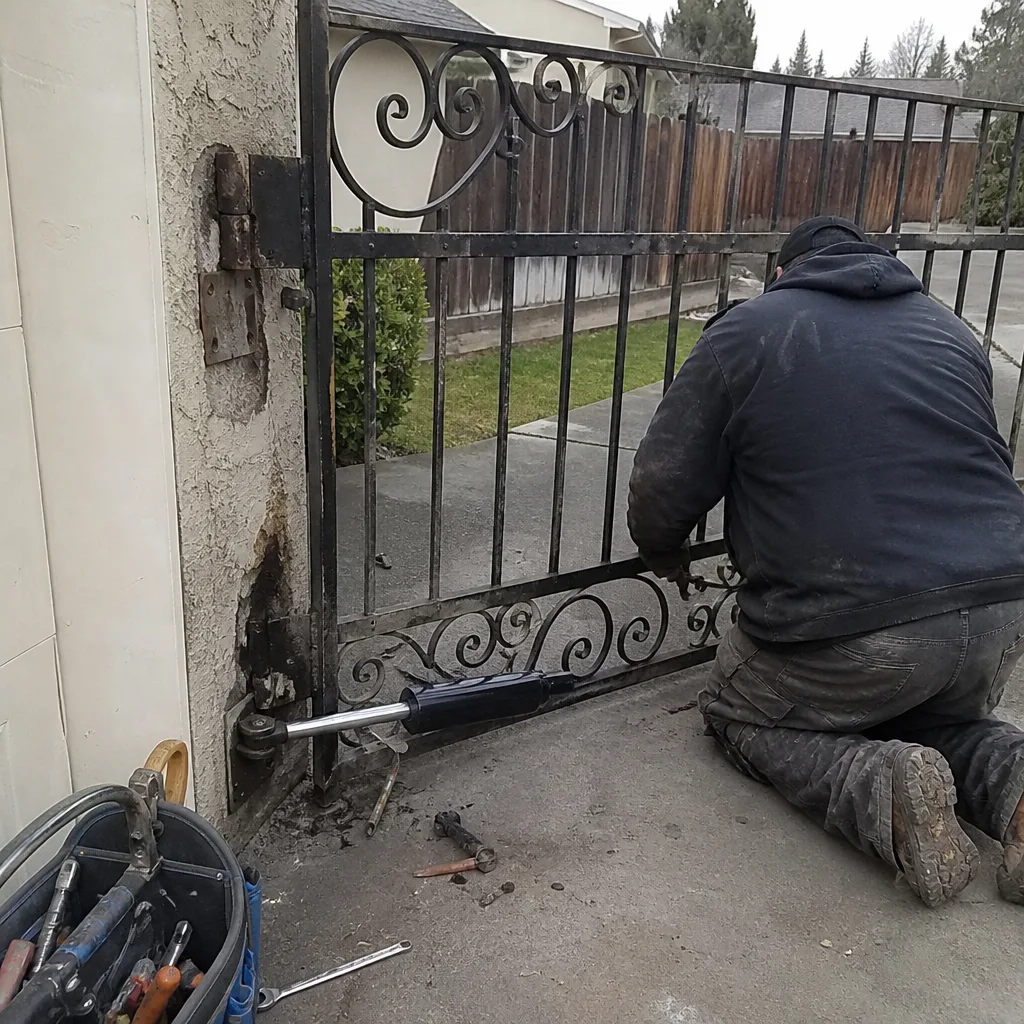 Before
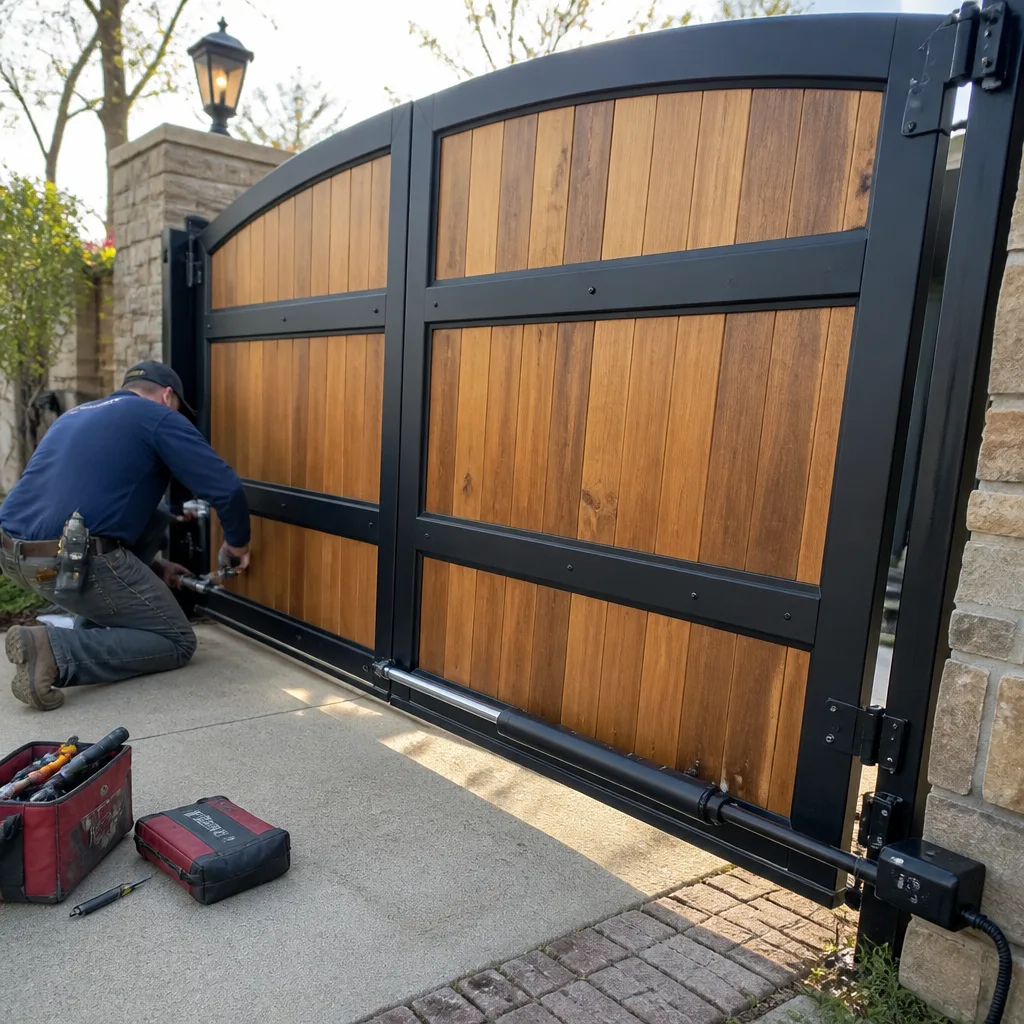 After
After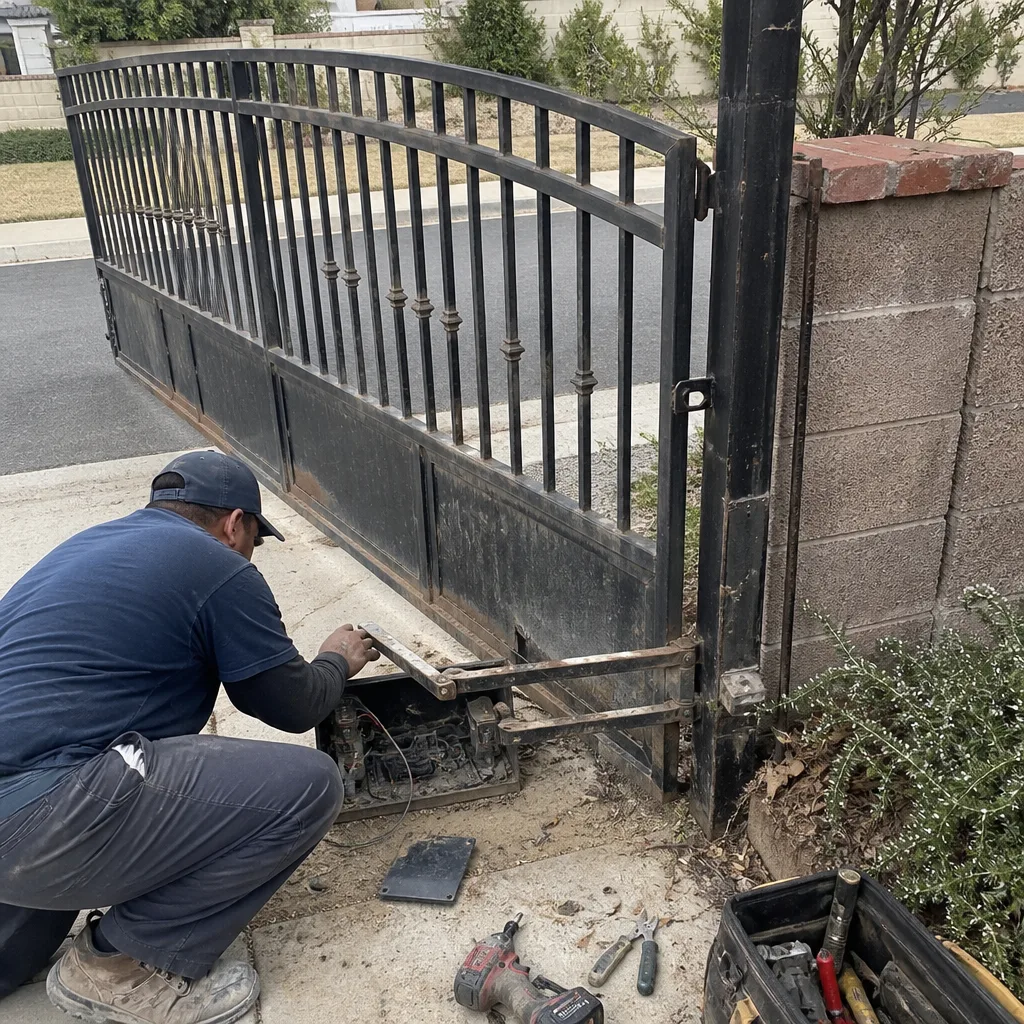 Before
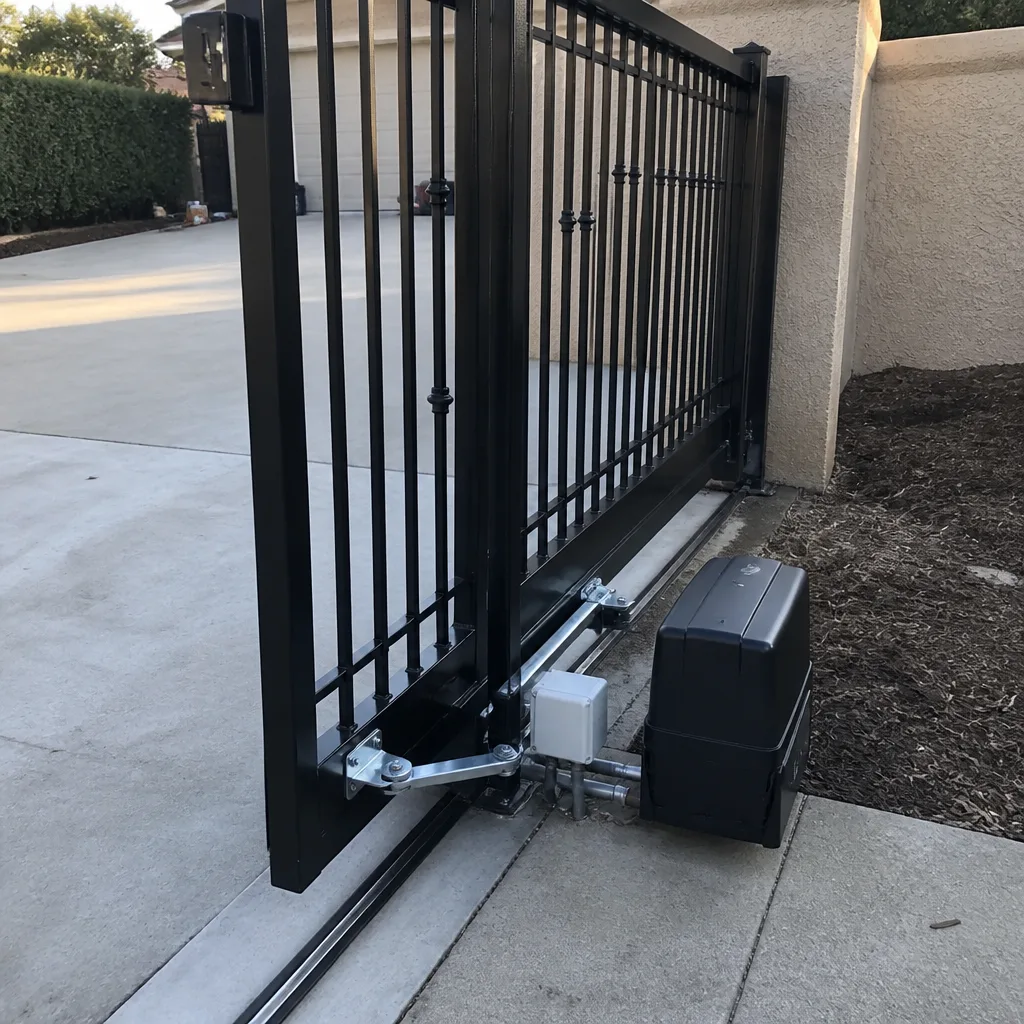 After
After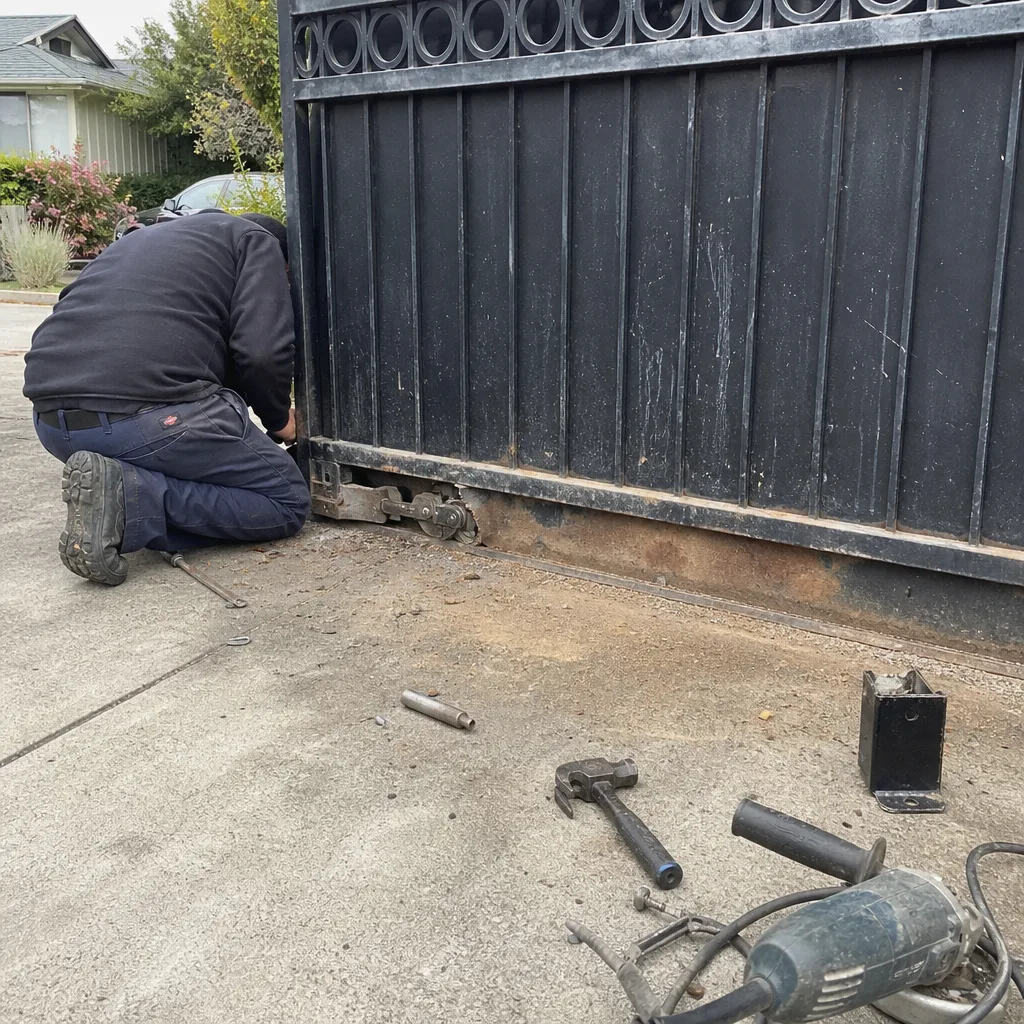 Before
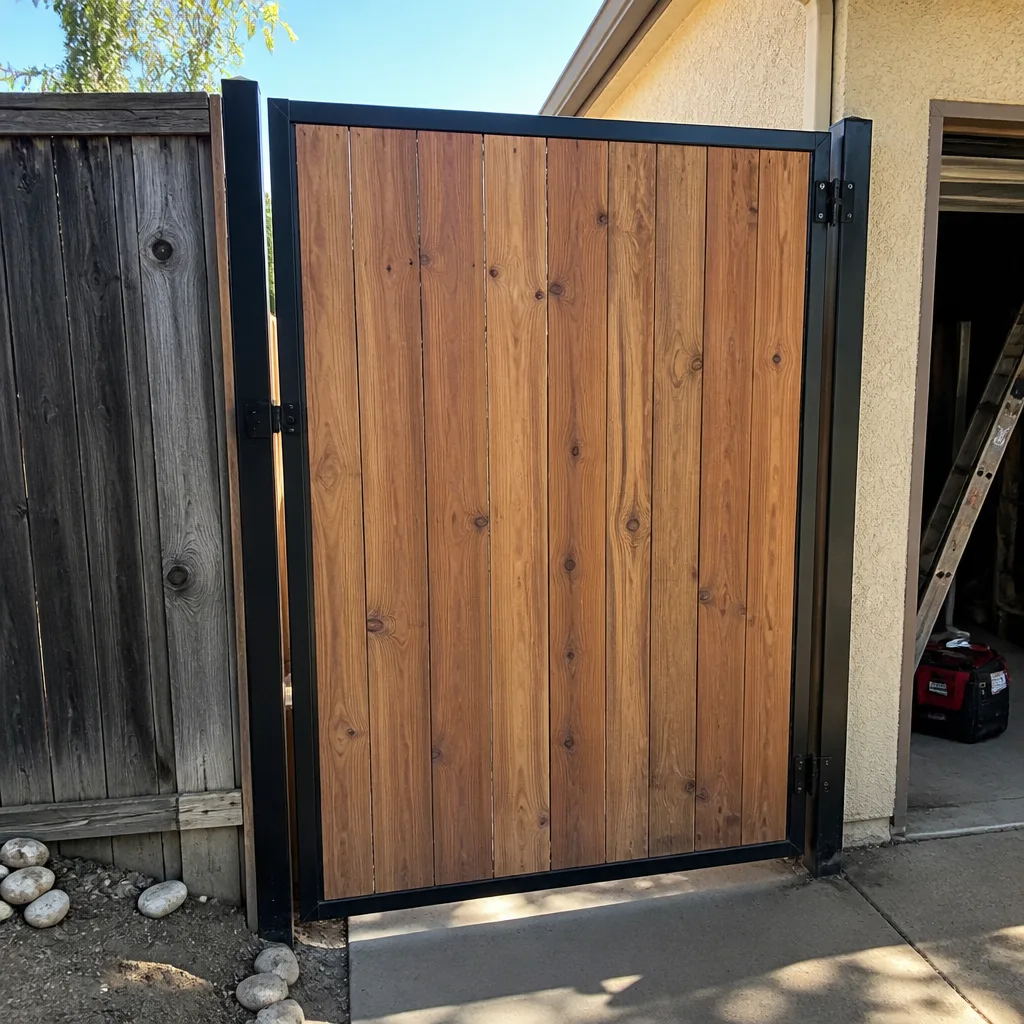 After
AfterWhen to Call a Professional
A leaning post with a cracked concrete footer is a re-set job that requires digging out the old footing, re-plumbing the post, and pouring new concrete, and it’s not something most homeowners want to attempt in one weekend. A gate that has rusted through at a welded joint is a safety hazard, not a coating problem. An electric operator that trips a breaker, makes a humming noise but doesn’t move, or repeatedly reverses for no reason typically has an electrical fault that a homeowner shouldn’t chase. If you’re in Fresno and you’re looking at a gate issue that’s getting worse every month, Gate Installation in Fresno and repair work from Latch and Post Gate Repair Fresno comes with a written price before any work starts, so you’ll know the number before you decide anything. Estimates are free, and the number to call is (559) 785-2501.
Frequently Asked Questions
The two useful maintenance windows in Fresno are late March, after wet-season soil movement and corrosion have done their damage, and late September, after summer heat stress has peaked but before the first storms saturate the soil. Work done outside these windows is either fighting the heat, fighting the rain, or fighting soil conditions that make accurate inspection difficult.
For a homeowner doing the work themselves, the annual materials cost for a typical single swing gate runs $25 to $50: cold galvanizing compound, epoxy wood filler, lubricant, and a can of sealer if the finish needs touch-up. Professional seasonal maintenance service from a Fresno gate specialist typically runs $150 to $300 per visit, depending on gate size and whether an electric operator is included. Call (559) 785-2501 for an exact quote, estimates are free.
Summer heat dries out the wood around the hinge screws, which shrinks the wood fibers, loosens the screw’s grip, and allows the gate to drop slightly. Each summer the hole enlarges a little more, so the sag accumulates. Repacking the screw holes with epoxy filler in either March or October stops the progression.
Yes. Tule fog keeps surfaces continuously damp for days at a time, whereas rain runs off quickly. The fog’s condensation also carries dissolved nitrates and sulfates that make it more chemically active than clean rainwater, which is why unpainted hardware corrodes faster during fog season than during rainy periods.
If the gate is wood and set into soil, yes, a slow deep soak of the soil under the posts every two weeks in June, July, and August slows the moisture loss that causes checking and screw pull-through. You’re not watering the wood directly. You’re keeping the soil moisture from dropping so low that the wood loses moisture too fast.
Sometimes. If the lean is under about 1/2 inch and the concrete footer is intact, the post can often be re-plumbed and the footer reinforced with additional concrete. If the footer is cracked or spalled, the post typically needs to be re-set in a new footing. Call (559) 785-2501 for a free evaluation, and you’ll get a written price before any work begins.
The Bottom Line
Fresno’s climate punishes gates in two very different ways, either the dry heat of summer pulling wood apart and loosening screws, or the wet fog of winter corroding hardware and heaving soil. The homeowners who spend the least on gate repair over the years are the ones who work inside the two windows that actually matter: late March for post-plumb and corrosion recovery, and late September for hardware prep and sealing before the first storm. Ten minutes a month catches most problems early. The tasks are simple enough for most homeowners, and the ones that aren’t, a leaning post, a rusted weld, an operator that’s tripping a breaker, are exactly the kind of work a Fresno gate specialist should handle. For deeper reading, see The Complete Guide to Gate Repair in Fresno.
Written by Cody Beckman, Owner at Latch and Post Gate Repair Fresno, serving Fresno since 2009. Browse more guides & resources.